Stay up to date with the latest news
Subscribe to our telegram channel

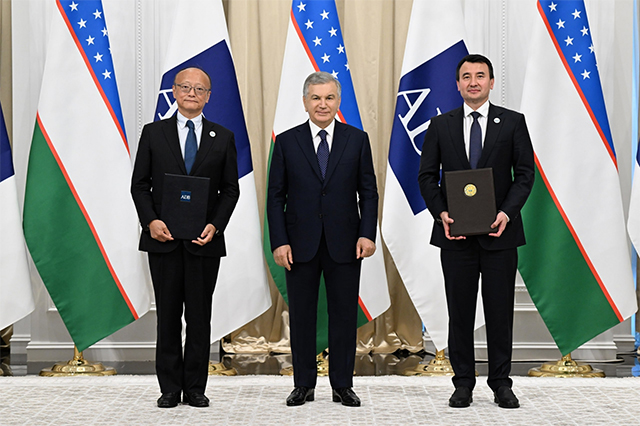
ADB to channel US$12.4 billion into Uzbekistan reforms
Tashkent, Uzbekistan (UzDaily.com) — A ceremony marking the exchange of a signed Partnership Program between Uzbekistan and the Asian Development Bank (ADB) for the period through 2030 was held on the sidelines of the bank’s 59th Annual Meeting in Samarkand.
The document establishes a new five-year cycle of cooperation with a total financing volume of US$12.4 billion and defines priority areas for investment in Uzbekistan’s economy.
The signing took place against the backdrop of three decades of cooperation between the two sides. Since Uzbekistan joined ADB in 1995, the bank’s cumulative investment in the country has exceeded US$15.5 billion.
Uzbekistan is the largest recipient of ADB funds in Central Asia and ranks among the top 10 countries globally in terms of the bank’s operations. In 2025, ADB’s annual commitments to Uzbekistan reached a record level of over US$1.4 billion.
The accumulated investment portfolio covers key sectors of the economy. The transport sector received US$3.1 billion, energy US$2.9 billion, water supply, sanitation and urban services US$1.4 billion, and agriculture and water resources US$0.9 billion.
Another US$7.2 billion has been directed to private sector support, budget financing, and other areas. These investments have resulted in the modernization and construction of more than 1,400 kilometers of railways and over 1,700 kilometers of roads, the laying of more than 4,000 kilometers of water supply networks and 550 kilometers of sewerage systems, as well as the construction and renovation of around 750 educational institutions.
The new five-year program envisions a diversified financing structure designed to simultaneously support state reforms and private sector development.
The largest share — US$3.3 billion — is allocated as budget support for reforms. Direct financing for infrastructure projects amounts to US$2.6 billion, while results-based lending accounts for US$2.2 billion.
Direct private sector financing will total US$2 billion, and public-private partnership projects will receive US$1.7 billion. Multi-tranche financing mechanisms will provide an additional US$350 million, while partial credit guarantee instruments will amount to US$250 million.