Stay up to date with the latest news
Subscribe to our telegram channel

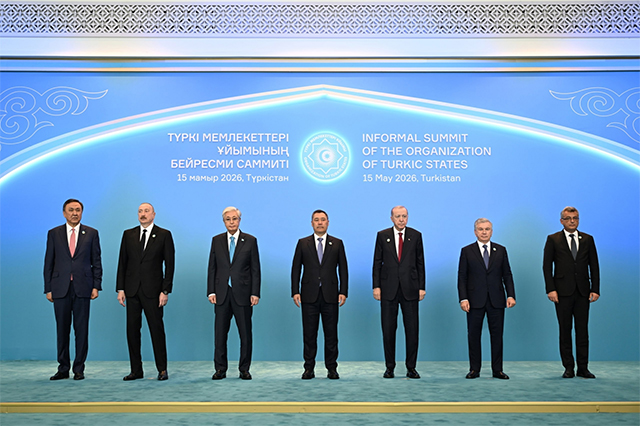
Uzbekistan Proposes AI and Digital Initiatives at Turkic Summit
Tashkent, Uzbekistan (UzDaily.com) — President of Uzbekistan Shavkat Mirziyoyev addressed an informal summit of the Organization of Turkic States in Turkestan, presenting a series of initiatives aimed at expanding cooperation in artificial intelligence and digital technologies on 15 May.
The Uzbek leader proposed creating a network for strategic cooperation in artificial intelligence, developing a concept for a “Digital Turkic Corridor,” and establishing a Turkic cybersecurity alliance.
The meeting was held in the ancient city of Turkestan at the initiative of Kazakhstan’s President Kassym-Jomart Tokayev on the eve of the Kurban Hayit holiday. Mirziyoyev noted the symbolic importance of holding the summit in a city closely associated with Khoja Ahmed Yasawi, describing it as a key spiritual symbol of Turkic unity. He thanked Tokayev for developing Turkestan into a spiritual center connecting brotherly peoples and expressed gratitude to Azerbaijani President Ilham Aliyev for his effective chairmanship of the organization.
The head of state stressed that the integration of the Turkic world is a long-term strategic priority amid rising global tensions and weakening international institutions. He noted that the Organization of Turkic States has become an influential structure with steady growth. In 2025, the combined economic potential of member states exceeded 2.4 trillion US dollars, with growth rates twice the global average. Trade between Uzbekistan and member states increased by 14 percent last year. The Turkic Investment Fund began operations this year, along with the Council of Central Banks and the Turkic Green Finance Council.
Mirziyoyev emphasized the need to systematize relations among member states. He said the summit theme, “Artificial Intelligence and Digital Development,” is timely and highlighted contributions of historical Turkic scholars Muhammad al-Khwarizmi, Ahmad al-Fergani, Abu Rayhan Beruni, and Mirzo Ulugbek to mathematics, astronomy, and science, which laid foundations for modern artificial intelligence.
As a first initiative, he proposed establishing a network for strategic AI cooperation within the organization to identify new growth points, develop cloud and quantum computing technologies, and build a unified digital space. He noted that Uzbekistan has attracted 6 billion US dollars in data center investments in recent years. He also proposed a “Digital Turkic Corridor” linking regional data centers via high-speed communication networks and announced a technology forum in Tashkent with member states.
The second direction focuses on science, education, and youth policy. He highlighted the Center of Islamic Civilization in Tashkent as a growing regional scientific and educational hub and welcomed the opening of a TURKSOY office there. He proposed combining the Center, TURKSOY, and the Turkic Academy into a unified big data platform for historical and cultural sources. He also called for deeper study of the Yasawi order’s ideas of tolerance and enlightenment.
He noted that Khiva has been designated the Youth Capital of the Turkic World and said Uzbekistan is ready to host a youth leaders’ forum and international youth festival. He highlighted the “Five Million AI Leaders” program, under which more than one million young people have already gained basic AI skills. He invited member states to join a joint venture fund being established by Uzbekistan and Kazakhstan to support AI startups and innovation.
The third initiative focused on integrated digital logistics platforms to improve transport connectivity. Mirziyoyev said the e-permit system has been fully implemented between Uzbekistan and all member states. He stressed the strategic importance of the Middle Corridor and its connection to the planned China–Kyrgyzstan–Uzbekistan railway. He called for implementation of a simplified customs corridor agreement and full digitalization of data exchange across logistics chains.
The fourth initiative concerns environmental cooperation. He proposed a satellite-based climate risk monitoring system under the organization to track droughts, soil degradation, and glacier melt, and to apply AI in transboundary water management. He said the Central Asian University for Environment and Climate Studies in Tashkent has allocated 50 scholarships for youth from Turkic countries for 2026–2027. He proposed declaring 2027 the Year of Environmental Protection within the organization and invited partners to participate in environmental forums in Samarkand.
On security, Mirziyoyev called for stronger cooperation among law enforcement agencies against terrorism, extremism, and radical ideologies. He stressed expanding cyber cooperation, training specialists, and improving real-time information exchange. He proposed establishing a Turkic cybersecurity alliance to protect digital infrastructure. He also emphasized strict adherence to ethical standards in AI use and suggested addressing the issue at a joint meeting of foreign ministers and security services in Samarkand.
He quoted Khoja Ahmed Yasawi from the “Divan-i Hikmat,” highlighting messages of unity and love among Turkic peoples. He expressed confidence that combining intellectual potential would turn the Turkic world into a space of innovation and sustainable development. He said the Turkestan Declaration would strengthen fraternal ties and advance the “Vision of the Turkic World 2040.”
Before the session, leaders participated in a ceremony laying the foundation stone for the Center of Turkic Civilization and were presented with digital initiatives from Kazakhstan and other member states in IT and AI.
#Shavkat Mirziyoyev