Stay up to date with the latest news
Subscribe to our telegram channel

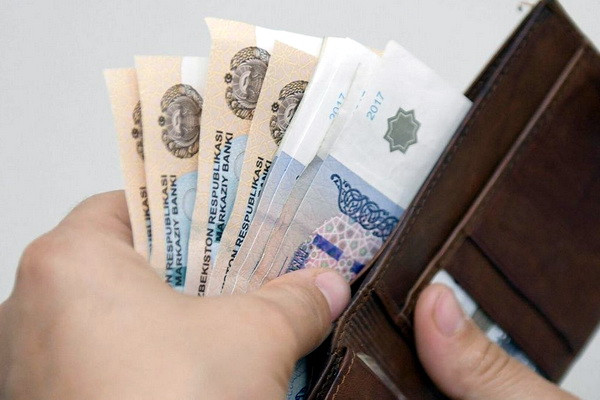
Personal debt in Uzbekistan rises as experts advise budgeting
Tashkent, Uzbekistan (UzDaily.com) — People in Uzbekistan are increasingly living on borrowed money, with experts warning that financial discipline is becoming critical for household stability. According to analysts from Alpari, residents of Uzbekistan spend more than 30% of their income on loan repayments, while around 12% of borrowers are on the brink of default.
They note that such situations rarely begin with major financial mistakes. Instead, they are often triggered by small, seemingly harmless decisions such as impulsive purchases, underestimating expenses, or a lack of financial planning.
Experts emphasize that people who do not live in debt are not necessarily higher earners—they simply make different financial decisions. They also warn that higher income alone does not solve poor money management, as spending tends to grow alongside earnings, a phenomenon often associated with Parkinson’s Law.
To avoid debt accumulation, specialists recommend structured budgeting, including the widely used 50/30/20 rule. Under this approach, 50% of income is allocated to essential expenses such as food, utilities, transport, and clothing; 30% goes to personal wants such as entertainment, travel, and subscriptions; and 20% is reserved for savings and investments as a financial commitment to oneself.
The so-called “three-envelope” system only works if categories are strictly separated. If savings are used to cover daily expenses, the system breaks down. In cases where income does not fit planned limits, experts advise adjusting spending habits rather than turning to credit—by reducing unnecessary costs, switching to cheaper services, or increasing income.
Financial planning, they say, improves transparency and removes uncertainty, preventing money from “disappearing” without explanation and reducing the need for borrowing.
Alpari experts also stress the importance of regular savings. At least 10% of income should be set aside each month as a fixed amount rather than whatever remains after expenses. Otherwise, savings are unlikely to accumulate.
These savings form the basis of an emergency financial cushion, ideally equal to six months of income. Such a buffer is intended for situations such as job loss or income reduction, allowing individuals to cope with financial shocks without borrowing.
Importantly, emergency funds should not be used for everyday purchases. Having such a cushion improves financial confidence and helps individuals make decisions without pressure, particularly during crises when haste often leads to further debt.
Another 10% of income, experts recommend, should be directed toward investments. These may include currency purchases, precious metals, or commodity market instruments. Each option differs in risk and return, making diversification an important principle.
Investment returns depend on consistency, with even small monthly contributions potentially producing significant long-term results. Risk levels should be matched to financial goals, with low-risk instruments preferred for short-term needs and higher-risk options considered for long-term goals.
Experts also advise avoiding emotional spending, noting that up to 40% of purchases are made impulsively. A simple method is to delay purchases for 24 hours, or longer for more expensive items. In many cases, the desire to buy disappears after a short pause.
They also recommend avoiding shopping in emotional states such as fatigue or stress, which increase impulsive behavior. A common rule suggests that if a person cannot afford to buy an item twice without affecting their budget, they should reconsider the purchase.
Online marketplaces are identified as a major driver of unnecessary spending due to ease of purchase and reduced psychological “pain of payment.” One suggested method is to disable automatic payment options to create a pause before completing transactions.
Experts further highlight that small, frequent expenses—such as dining out, online shopping, and subscriptions—often accumulate unnoticed, leading people to question where their money has gone at the end of the month.
They advise regularly reviewing subscriptions, reducing unnecessary services, and replacing frequent restaurant meals with home cooking where possible. Even minor optimizations, they note, can free up significant funds equivalent to a small loan.
Ultimately, Alpari analysts conclude that financial stability is not determined by income level or luck, but by consistent control over spending, disciplined planning, and long-term investment habits.