Stay up to date with the latest news
Subscribe to our telegram channel

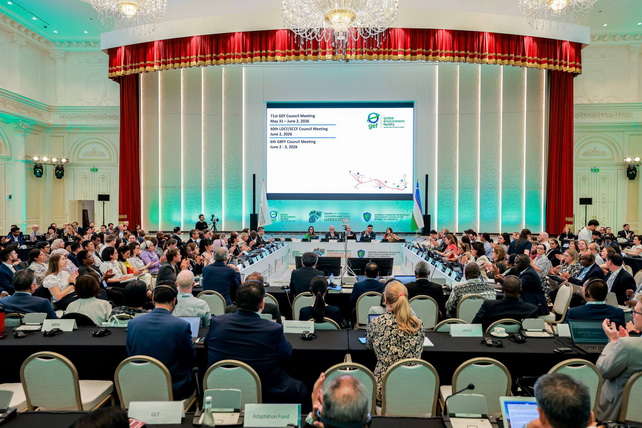
GEF Launches CAWLN Water-Land Program Across Central Asia
Tashkent, Uzbekistan (UzDaily.com) — The rivers supplying water to 60 million Central Asians are under mounting stress — and a new five-nation program has just moved from planning to action.
The Central Asia Water-Land Nexus (CAWLN) program entered its practical implementation phase at the Eighth Assembly of the Global Environment Facility (GEF), uniting Kazakhstan, Kyrgyzstan, Tajikistan, Turkmenistan, and Uzbekistan under a coordinated framework for integrated natural resource management.
Financed by the GEF and implemented by the UN Food and Agriculture Organization (FAO), the program was formally launched on the eve of World Environment Day, June 4, 2026, following a high-level ministerial roundtable at which Central Asian ministers and senior officials assessed the region's ecological challenges and the scope for deeper cooperation.
The stakes are substantial. The Amudarya and Syrdarya river basins — the hydrological backbone of the region — supply water resources to approximately 60 million people. Climate change and intensifying pressure on natural resources are compounding water scarcity and land degradation across the region, with degraded lands already affecting up to half of the region's total territory and generating significant economic losses.
The CAWLN program addresses these pressures through three operational tracks: developing coordinated transboundary approaches to land and water management; improving the condition of agricultural lands and catchment basins; and strengthening ecosystem resilience while supporting rural communities dependent on those systems.
On the technical side, the program will deploy modern monitoring infrastructure, including satellite technologies and early warning tools, alongside the promotion of sustainable land-use practices and active ecosystem restoration.
Participants at the roundtable closed proceedings by underscoring that regional cooperation and concerted action — not unilateral national responses — represent the only viable path to building resilience against the scale of ecological challenges the region faces.